Hello, I'm Dr. Wangjin Lee, Director of Boost Clinic Cheongdam.

Deciding how to treat nasolabial folds — filler, lifting, or thread lifting — is harder than it looks, because the right answer depends on which of two very different causes applies to you.
The short answer
How visible nasolabial folds become depends on how much midface sagging and how much volume loss around the fold are each contributing. Since both can appear together, seeing the overall facial structure matters more than treating the fold line on its own.
What's actually different between "sagging" and "volume loss" folds
The nasolabial line itself is a fixed boundary between the cheek and the tissue around the mouth, firmly anchored in place. That boundary stays largely fixed with age — but the fat and skin of the upper cheek, sitting above it, gradually move downward with gravity and reduced elasticity.
When that descending cheek tissue piles up against the fixed boundary and folds over it, that's a sagging-type nasolabial fold.
When the volume of the upper cheek and the area around the fold itself simply decreases, leaving a visibly deeper groove, that's a volume-loss-type fold.
In practice, the two often appear together. A simple way to get a sense of which is dominant: gently lift the cheek upward with your hand. If the fold visibly softens, sagging is likely playing the larger role.
This distinction matters because sagging calls for a lifting-based approach, while volume loss calls for filling the area — and the amount of volume running from the upper cheek down to the fold varies quite a bit from person to person, which is part of why the dominant cause differs by individual too.
Matching the treatment to the cause
If cheek sagging is the main driver, ultrasound or radiofrequency-based lifting, or thread lifting, are worth considering. Each works differently, so skin thickness, fat distribution, and degree of sagging all factor into the choice.
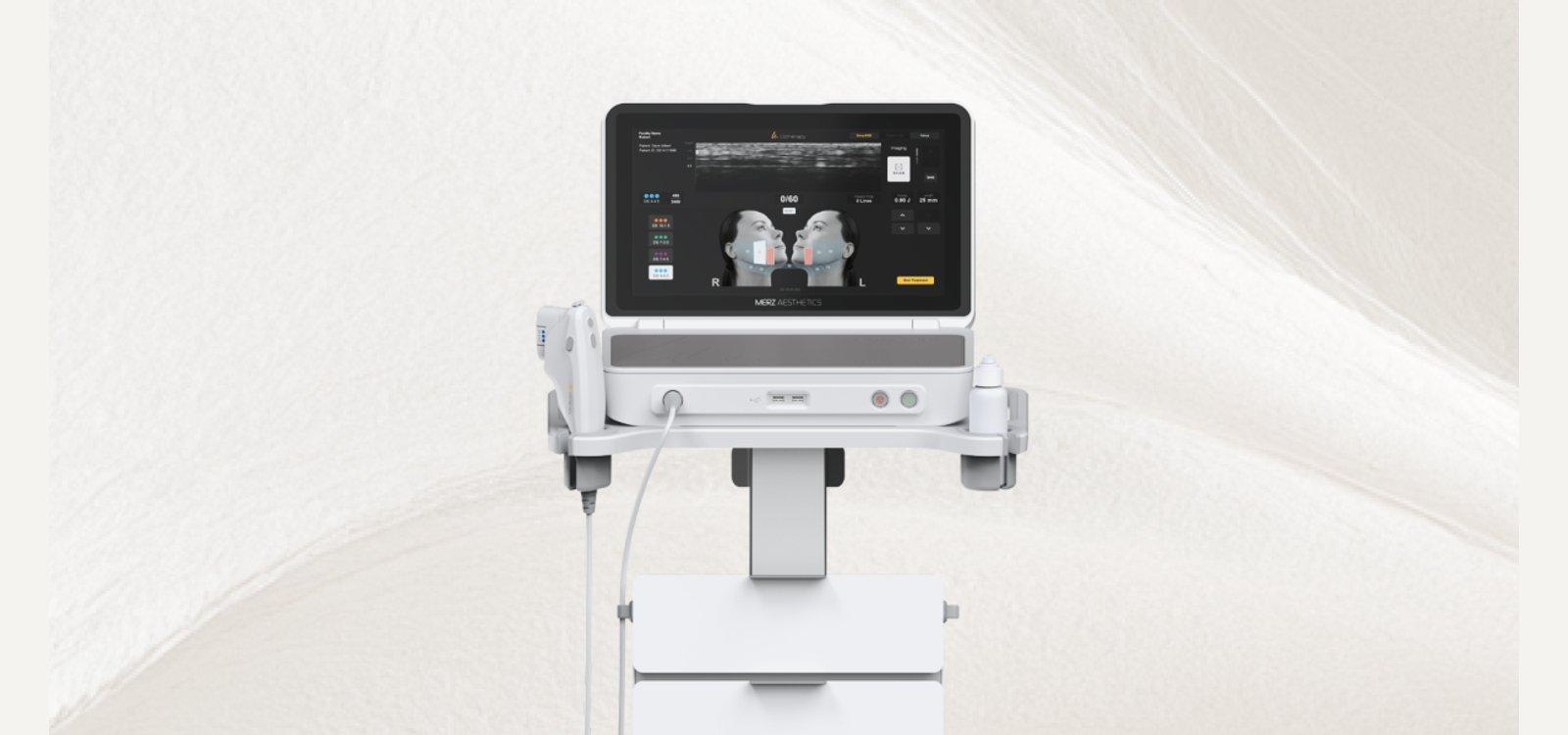
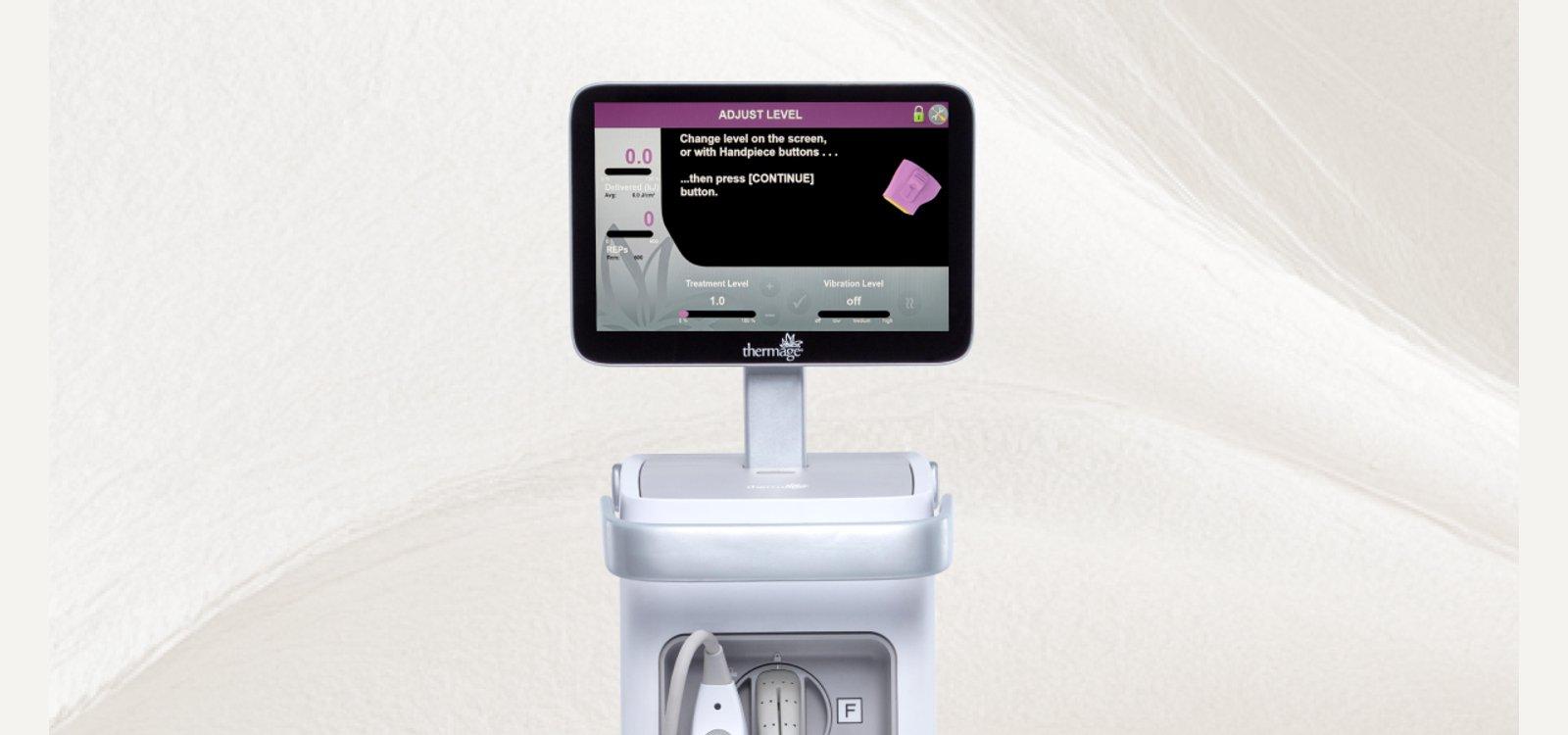
Ultherapy uses focused ultrasound energy to create thermal coagulation points at a target depth; Thermage and Density use radiofrequency energy to heat tissue in the dermis. Depending on the treatment area and energy settings, cheek hollowing can occur, so an experienced provider who can properly assess facial structure and skin condition matters here.
If volume loss around the fold is the main driver, filler can be considered to restore what's missing. That said, if cheek sagging is actually the dominant cause, filling only the fold line itself may not be the right approach.
| Treatment | How it works |
|---|---|
| Ultherapy | Ultrasound energy creates thermal coagulation points in the fascia layer |
| Thermage / Density | Thermage uses radiofrequency to heat the dermis; Density combines monopolar and bipolar energy |
| Thread lift | Threads mechanically lift and reposition tissue |
| Filler | Directly restores lost volume |
| Sculptra / Juvelook Volume | Poly-L-lactic acid (PLLA)–based; breaks down while stimulating collagen-producing cells |
Given this, nasolabial folds are rarely addressed with a single treatment alone — identifying which cause, sagging or volume loss, is dominant comes first.
Is combination treatment always necessary?
Not for everyone. Ultrasound and radiofrequency work through different mechanisms and target different depths, so neither is categorically better — the right choice depends on skin thickness, degree of sagging, fat distribution, and treatment history. The common assumption — "more fat means ultrasound, thinner skin means radiofrequency" — oversimplifies it; matching depth and area correctly matters more.
When both sagging and volume loss are present, a combined approach — lifting to reposition tissue first, followed by filler to restore volume — is sometimes considered. What matters is matching the approach to the cause, not the number of treatments involved. The combination and sequencing aren't the same for every patient either.
Key takeaways
Nasolabial folds are classified as sagging-type, where upper cheek tissue has descended onto a fixed boundary, and volume-loss-type, where volume around the fold itself has decreased. Sagging generally calls for lifting-based treatment first; volume loss calls for filler. When both are present, combination treatment may be considered, but it requires individual assessment — including awareness of filler-related vascular complication risk.
FAQ
How do I know if it's sagging or volume loss? Sagging means upper cheek tissue has moved downward and piled onto a fixed boundary — a position problem. Volume loss means the area around the fold has lost volume, creating a depression — a volume problem. The two often appear together, so figuring out which one is dominant matters.
Will filler alone fix nasolabial folds? If volume loss is the main cause, filler is usually considered first. If cheek sagging is the main cause, filling only the fold line can leave the face looking heavier rather than better.
What's the difference between Ultherapy, Thermage, and Density? Ultherapy is generally described as reaching the fascia layer with ultrasound energy; Thermage and Density use radiofrequency energy at the dermis. None is categorically better — it depends on your skin thickness, degree of sagging, and fat distribution.
Do I need combination treatment? Not necessarily. It may be considered when both sagging and volume loss are present together, but the combination and sequencing should be determined individually, not applied the same way to everyone.
If you're trying to figure out whether sagging or volume loss is driving your nasolabial folds, we're glad to help you sort that out — in English, free of charge, over WhatsApp.
Message us on WhatsApp: wa.me/821072736699